Stéphane Kapitaniuk · Publishing presentations
From books
to relationships
How good books reach readers, why readers return, and how local voices grow. Lessons from two publishing presentations.
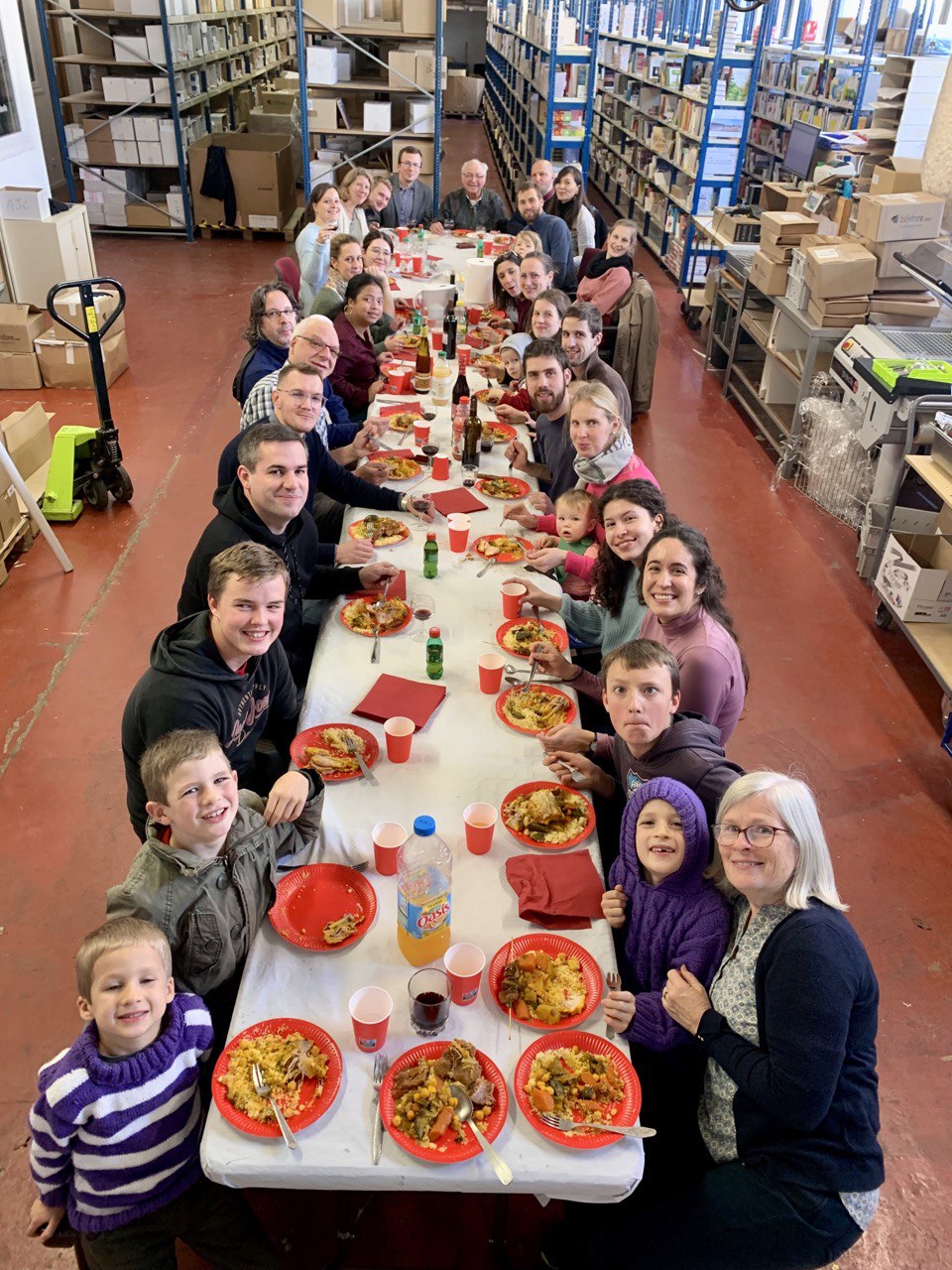

Presentations by Stéphane Kapitaniuk
Director, BLF Éditions and TPSG Académie


A book can be carefully translated, beautifully edited, and printed with conviction, yet still spend its life in a warehouse. For Stéphane Kapitaniuk, the work of a publisher includes everything that helps those ideas reach someone who needs them.
In two presentations at the Marpent publishing gathering, BLF Éditions’ director general connected distribution with the development of local authors. The first asks how readers discover, receive, and engage with good books. The second asks who will write the books that speak to their lives. Together, they describe a publishing house that grows through relationships: with readers, churches, authors, editors, and other booksellers.
This is a summary of Stéphane’s presentations and the discussion around them. BLF’s experience supplies the examples; the diagrams explain the ideas without presenting them as a formula every publisher should copy.
Part 01 · Reach
Help good books leave the warehouse
More routes, useful introductions, and accessible formats.
01Give the reader more than one way in
Reach people through several complementary channels, with a clear reason to care about the book.
Stéphane began with the purpose of distribution. Moving a book matters because it makes teaching accessible. Revenue helps sustain that work, but the sale is not the whole reason for doing it. Publishers who care deeply about their books have something valuable to contribute when explaining why another person might read them.
BLF’s own story includes printing, publishing, warehousing, a blog, online shops, and training. That range creates more opportunities to meet a reader. Someone may encounter a book through a church table, a local bookstore, an online search, a recommendation, or a free resource. Each route reaches people another route may miss.
In the presentation, Stéphane described a substantial expansion in direct sales after 2019 while bookstore sales also increased. He also described two tougher recent years, when slower demand challenged the team’s earlier optimism. The useful lesson is the combination of channels. A publisher can build a relationship with readers and keep working with established booksellers. A participant reinforced that point: even a house that already sells mainly through its own website should examine the distribution channels it has overlooked.
Church book tables made the idea concrete. Finding a local enthusiast who understands the books can be more valuable than placing stock in another location. That person knows the congregation, can explain a title, and can connect it to a conversation already happening. The opportunity begins with service and a relationship.
A wider path to the reader
One catalogue. Several ways to discover it.
Online store
Search, browse, and choose a useful format.
Bookstores
Established places to find and recommend books.
Church tables
A trusted local person connects a book to a need.
Free resources
A generous introduction to an idea worth exploring.
02Free access needs a reason to read
A free library opens a door. Useful teaching and recommendations help a reader walk through it.
BLF has experimented with free digital books as a way to broaden access and start a continuing relationship. In the recording, Stéphane described a rotating library in its app: subscribers could access a selection of ebooks and audiobooks, with a new title unlocked each month and an older one leaving the selection.
The offer had expanded to 50 books for BLF’s anniversary. That detail describes the programme at the time of the talk, rather than a permanent promise about what is available today. The more enduring point is what happens after someone signs up.
Stéphane was candid about the gap between access and engagement. He estimated that only around 5–8% of app users returned regularly. A large digital library does not mean that everyone is reading it. The publisher still has to help a person recognise why a particular book matters now.
His examples were small and specific: an excerpt on a question someone is facing, an article that introduces an idea, or a pastor explaining what helped him in a book. A regular email can point subscribers back to something they already have access to. BLF’s rhythm combined an email about a book with another offering teaching or a useful free resource.
He also reported physical-book purchases following free-book announcements. That is an observation from BLF’s experience, not proof that every giveaway creates sales. It does challenge the assumption that digital access and paid print always compete. Different readers want different ways to engage with the same material.
03Make the next step useful and accessible
Offer a way to engage that fits the reader’s budget, habits, and interests.
The discussion moved from discovery to the practical barriers that stop a reader continuing. Price is one. Format is another. A person who cannot justify a full-price hardback may buy a used copy, choose a pocket edition, or listen to an audiobook during a journey.
Stéphane illustrated this with a range of possible prices for one title across formats. The point was choice: a publisher’s most important books should have several ways to reach people. A secondhand shop also gives donated books and usable damaged copies another life. He described BLF’s approach as both an affordability initiative and a way to support missionary work through its profits.
One idea, different ways to engage
Make room for different readers.
Book launches give the publisher another opportunity to explain relevance. Instead of announcing a title once and hoping it sells, Stéphane described a sequence that introduces the problem, involves readers, explains the book’s value, and answers reasonable objections. A launch can include a webinar, an audio edition, or a course alongside the book.
Those additions work best when they help someone learn. A course may make the same subject approachable for someone who struggles with long-form reading. An author conversation can answer a question the book description leaves open. The extra formats become part of the teaching rather than an arbitrary pile of bonuses.
There are limits. Stéphane acknowledged launch fatigue and diminishing returns. BLF chooses a small number of priority launches and lets subscribers opt out of a particular sequence. The lesson is to give a book sustained attention while respecting the reader’s attention in return.
Part 02 · Relationships
Build a reason to come back
Relevant communication, sensible tools, and room to experiment.
04Let the relationship shape the technology
Connect content, catalogue categories, and communication around an expressed interest.
The tools discussion began with an ordinary operational question: how can a publisher understand the interests people have already expressed?
Stéphane described connecting BLF’s online store with its email platform so that product categories could help organise communication. A reader who has chosen Bible commentaries may appreciate a relevant new commentary. Someone interested in resources for church leaders may want updates in that area. Useful categories make this easier than maintaining hundreds of individual product rules.
He named Shopify and Omnisend as tools in BLF’s setup. The principle is more transferable than the software choice: organise the catalogue, connect the relevant systems, and make the next message fit the reason the reader came. An inferred interest can be wrong, so people need a clear way to change which messages they receive.
One participant described work under development to connect articles with related free resources and books. An article about reading the Bible could introduce a Bible-study booklet, then offer further teaching on that same topic after an email signup. The reader gets a coherent next step; the publisher begins a relationship around an expressed interest.
That example belongs to the wider discussion. It should not be mistaken for a completed BLF or Modulus implementation. Its value here is architectural: content, resources, catalogue categories, and communication work better when they share a clear subject and purpose.
05Experiment before making the process automatic
Try a useful service, learn from the response, and then decide what deserves a system.
Stéphane’s three practical questions were whether a team could accept messiness, money, and mistakes. Trying a new distribution route often involves manual work and uncertainty. If every experiment has to begin as a fully polished system, some worthwhile ideas will never be tested.
BLF’s examples included church tables, new formats, secondhand stock, and different approaches to online retail. Each created operational work as well as opportunity. The discipline comes in reviewing what helps, deciding what deserves more effort, and letting weaker experiments go.
AI featured in the conversation as a tool for analysis and possible future service. Participants discussed examining business information, matching relevant content, and eventually helping with more individual follow-up. Stéphane explicitly said that the personalised AI and WhatsApp interactions he imagined were not yet something BLF was doing.
That distinction matters. A promising idea, a process being built, and a working service are different stages. The presentation offers reasons to explore the technology, but it does not establish that those proposed systems are deployed or that predictions about future search behaviour will come true.
For a publisher deciding where to begin, the discussion suggests a manageable sequence: understand one reader need, try a useful response, learn from it, and then consider which repeated steps a tool could support. Automation becomes easier to judge when the underlying service is already clear.
From an experiment to a useful process
- 01Try it
Serve one need through a small, workable experiment.
- 02Learn
Look at the response, the effort, and what needs to change.
- 03Build on it
Support the repeated work when the service is worth keeping.
Part 03 · Local voices
Grow the people behind the books
Small first projects, patient editing, and a continuing place in the community.
06Invest in the people who know the local questions
Local authors bring context, availability, and relationships that can give their work a lasting place.
The second presentation turned to local authors. Stéphane opened with a difficulty familiar to translation publishers: the English-language books they admire are often the outstanding books that travelled far enough to reach them. Comparing an emerging local writer with that selection can make the first manuscript seem disappointing before it has had a fair chance to develop.
There are real costs. With a translation, the original manuscript is already complete. A first-time author may begin with a promising idea and need help finding the structure, audience, and argument. Stéphane estimated that some local-author projects at BLF cost two to four times as much as translations. He presented that as an experience-dependent estimate, not a universal publishing ratio.
The reasons to invest are equally concrete. Local writers understand the questions, illustrations, assumptions, and experiences of their readers. They can participate in a webinar, speak at a church event, record a course, and stay involved after publication. Their relationships can give a book a continuing place in the community.
Stéphane reported that local authors now accounted for BLF’s bestselling books. He also connected that result with the attention given to their launches. The presentation does not isolate authorship as the single cause. It shows how local knowledge, editorial investment, availability, and sustained communication can reinforce one another.
A local publishing agreement may also give the house more flexibility to arrange formats and free distribution with the author. That flexibility depends on the agreement. The broader opportunity is to develop a body of work with someone whose teaching can grow over several books and many years.
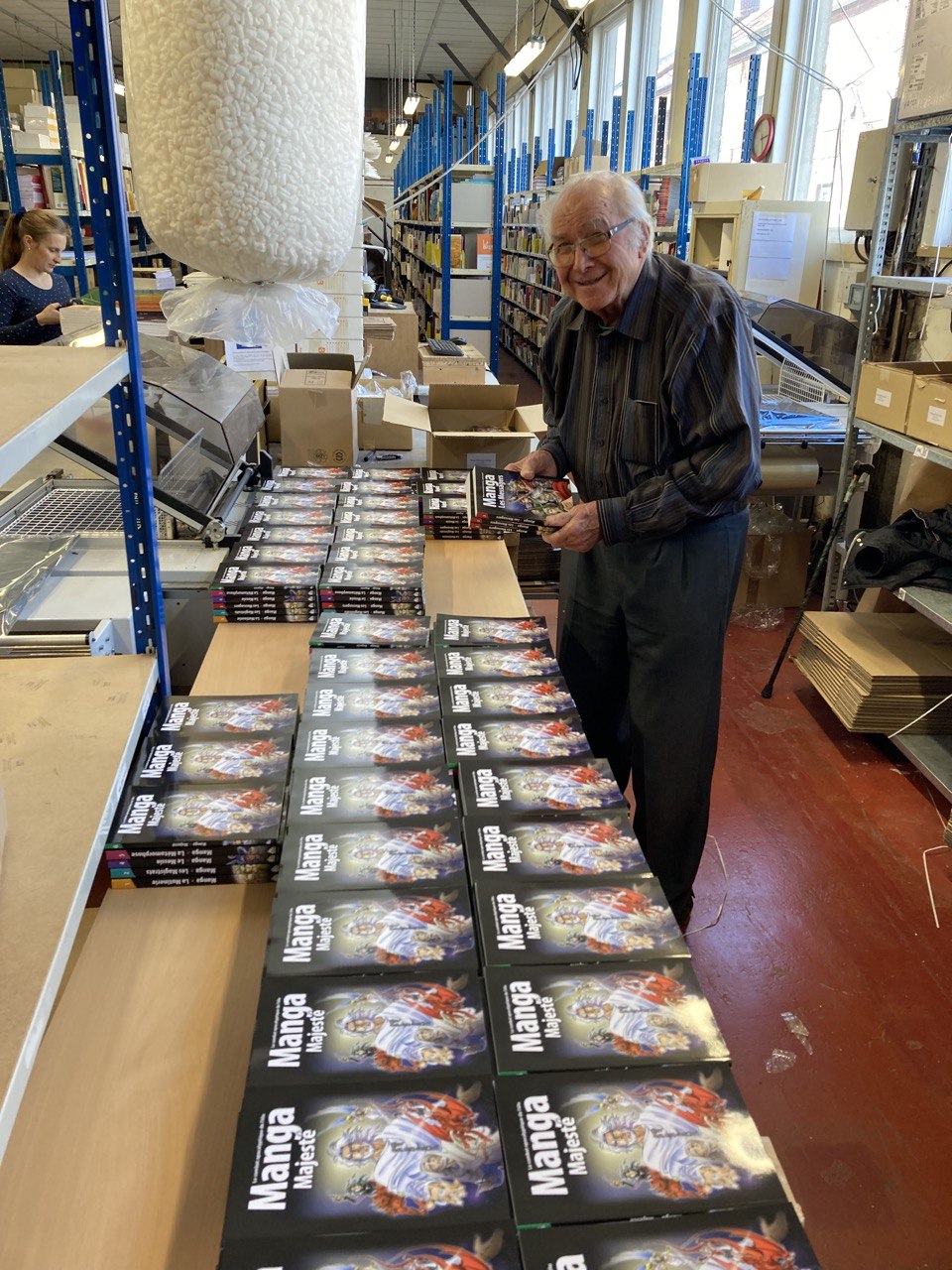
Behind every title
Publishing is people’s work.Editing, handling books, helping a reader choose, and supporting an author all contribute to the same purpose.
Original photograph supplied in the Distribution deck, slide 6. It is not a photograph of the 2026 gathering.07Start with a smaller piece of work
Use a small assignment to learn about the writer, the reader, and the working relationship.
The practical advice was to make the first step smaller. A blog article can show whether someone communicates clearly and welcomes editing. A webinar can reveal whether their teaching helps people. A chapter in a shared volume lets a publisher work with a new voice without committing to an entire book.
Short books and Bible studies offer another starting point. A pastor who has taught a biblical book repeatedly may already have substantial material, although shaping spoken teaching into readable prose still requires real editorial work. The question is which first project would be genuinely useful and achievable for this author.
Developing a local voice
Make the first step smaller.
- 01A real question
Begin with a need the author is already helping people understand.
- 02An article or a webinar
See whether the explanation is helpful and the working relationship is constructive.
- 03A chapter or a short study
Practise structure and revision within a manageable project.
- 04A focused first book
Develop one useful argument for a clear audience.
- 05Continuing work together
Build on the writer’s experience, reader questions, and editorial learning.
BLF had also tried more deliberate training. Stéphane described a writers’ retreat where authors worked on chapters or outlines, met editors, and learned the house’s approach. He then described an online cohort with teaching sessions, homework, and opportunities for editorial feedback. The retreat brought depth; the online format made it easier to gather people who were not all at the same stage of a manuscript.
The questions from the room sharpened the point. Being an effective preacher does not automatically make someone an effective author. Enthusiasm alone does not establish that a subject needs a full book. A series of small projects gives both sides evidence: can this person help readers, can they organise an argument, and can they work constructively with an editor?
It also gives a publisher useful material between releases. Articles, interviews, questions and answers, and short studies can serve readers throughout the year. Some may later contribute to a book; others can remain valuable in their original form.
08Keep the editor and the reader in the room
A strong book grows through clear expectations, honest feedback, and attention to real questions.
Lowering the size of the first assignment does not mean abandoning editorial care. Stéphane repeatedly returned to the relationship between author and editor. He valued writers who ask for substantive feedback and want the argument to become clearer, rather than simply having the typographical errors corrected.
Good expectations make that relationship more honest. What kind of book is being attempted? Who is it for? What does the editorial process involve? How much time can the house commit? BLF’s team described making the work and its costs visible to authors so that a manuscript is understood as a shared undertaking.
The conversation also returned to churches and teaching communities as places to discover writers. A publisher can notice someone already answering real questions, then help that person communicate beyond the original setting. Editorial work gives those ideas a shape that another reader can follow.
A final example brought the two presentations together: an existing French question-and-answer podcast had supplied material for a book. The audience’s questions, the teacher’s experience, and the publisher’s editorial work each contributed something. The book grew out of a continuing relationship with readers, and it offered a new way for that relationship to continue.
A publishing house that keeps learning
Distribution and author development can look like separate departments. In Stéphane’s account, they keep informing each other. Reader relationships reveal questions. Local teachers help answer them. Editors shape the work. Books, articles, audio, events, and thoughtful communication help it reach people who can use it.
A useful next step brings one of those relationships into focus. Begin with a manageable project, listen to the people it serves, and use what you learn to decide what comes next.